
 Contact us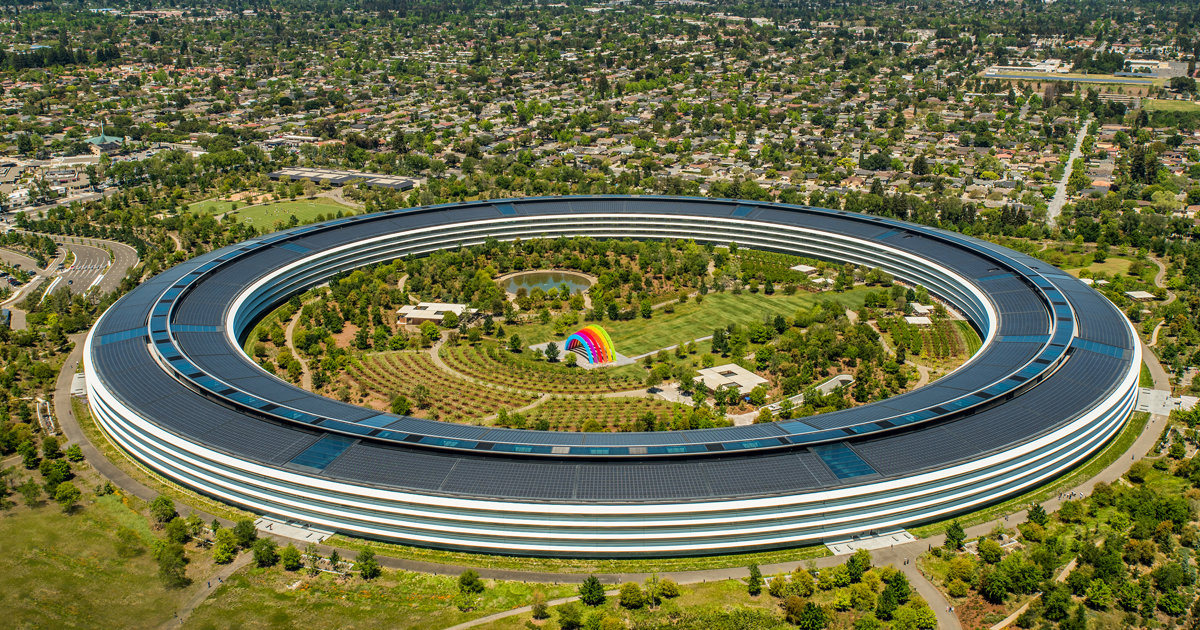
Sep 2, 2026•5 min read
How Metal Price Volatility Is Reshaping Office Fit-Out Costs in India
Read More
Written by: Aaradhna Mangla
Published at: 12/16/25

In an era where the workplace is no longer just a destination but a dynamic ecosystem, the architecture of corporate campuses is evolving beyond walls and glass. The world's leading organizations, from tech giants in Silicon Valley to sustainability pioneers in India and Europe are reimagining the office as a catalyst for creativity, community, and consciousness.
These modern campuses are not just built for work; they are designed for well-being, innovation, and purpose. They blend technology with nature, flexibility with identity, and human experience with environmental stewardship.
Let's explore ten of the world's most forward-thinking office campuses, each redefining what it means to work, connect, and belong.
Architect: Foster + Partners | Completed: 2017 | Built-up: 2.8 million sq. ft.
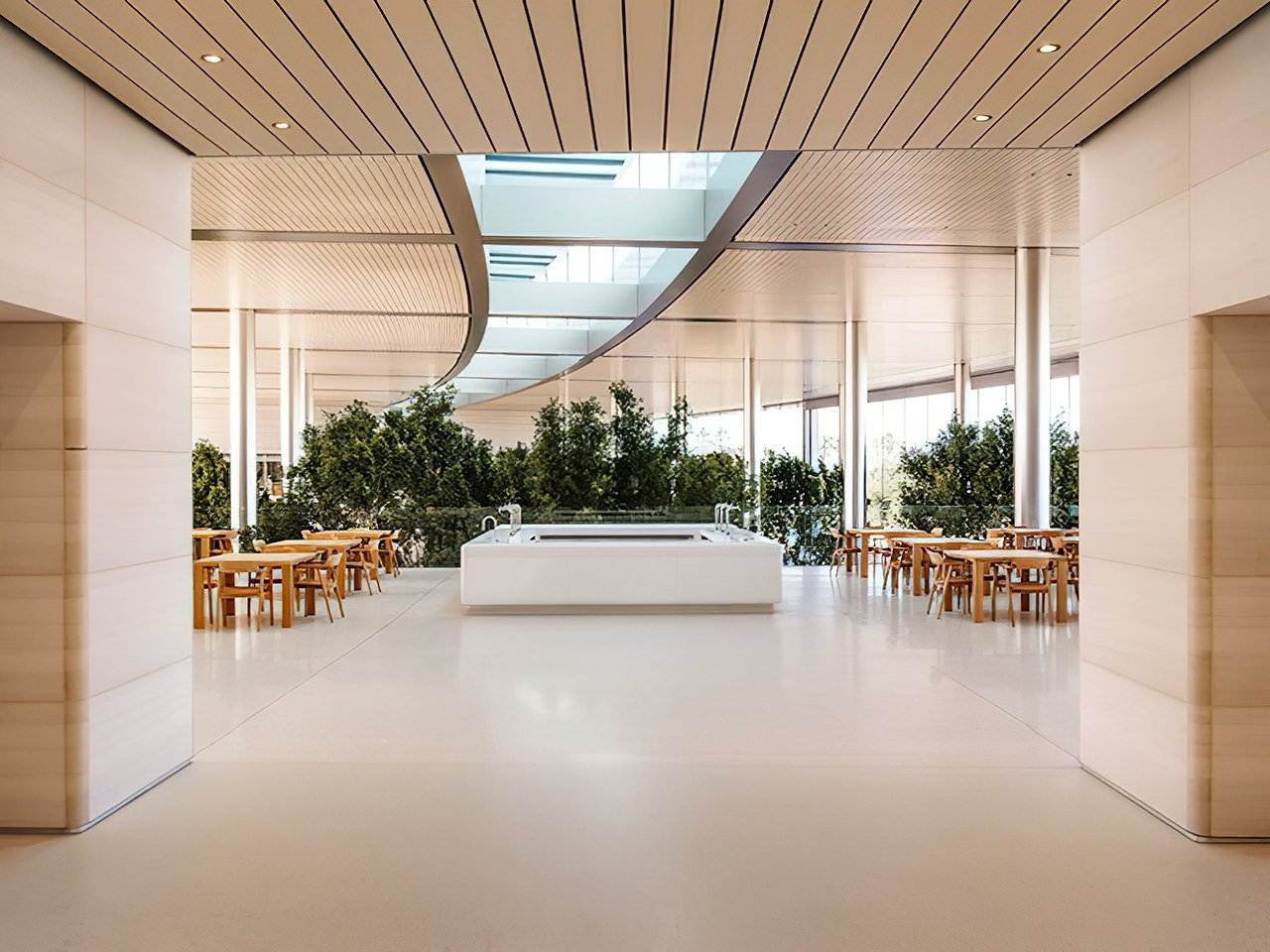
Apple Park, the “Spaceship” campus, is perhaps the purest expression of Apple's design philosophy; precision, minimalism, and harmony with nature. Designed by Sir Norman Foster and Apple's internal design team, this 175-acre campus functions like a living organism powered entirely by renewable energy.
80% of the site is green, with 9,000 trees and underground roads preserving the landscape's serenity. The ring, a 1,615-foot-diameter circle of glass and limestone, embodies transparency and collaboration. Inside, modular pods and light-filled atria encourage spontaneous interaction. Seamless details, no visible screws, no clutter reflect Apple's obsession with craft. It's not merely an office; it's a design manifesto in built form.
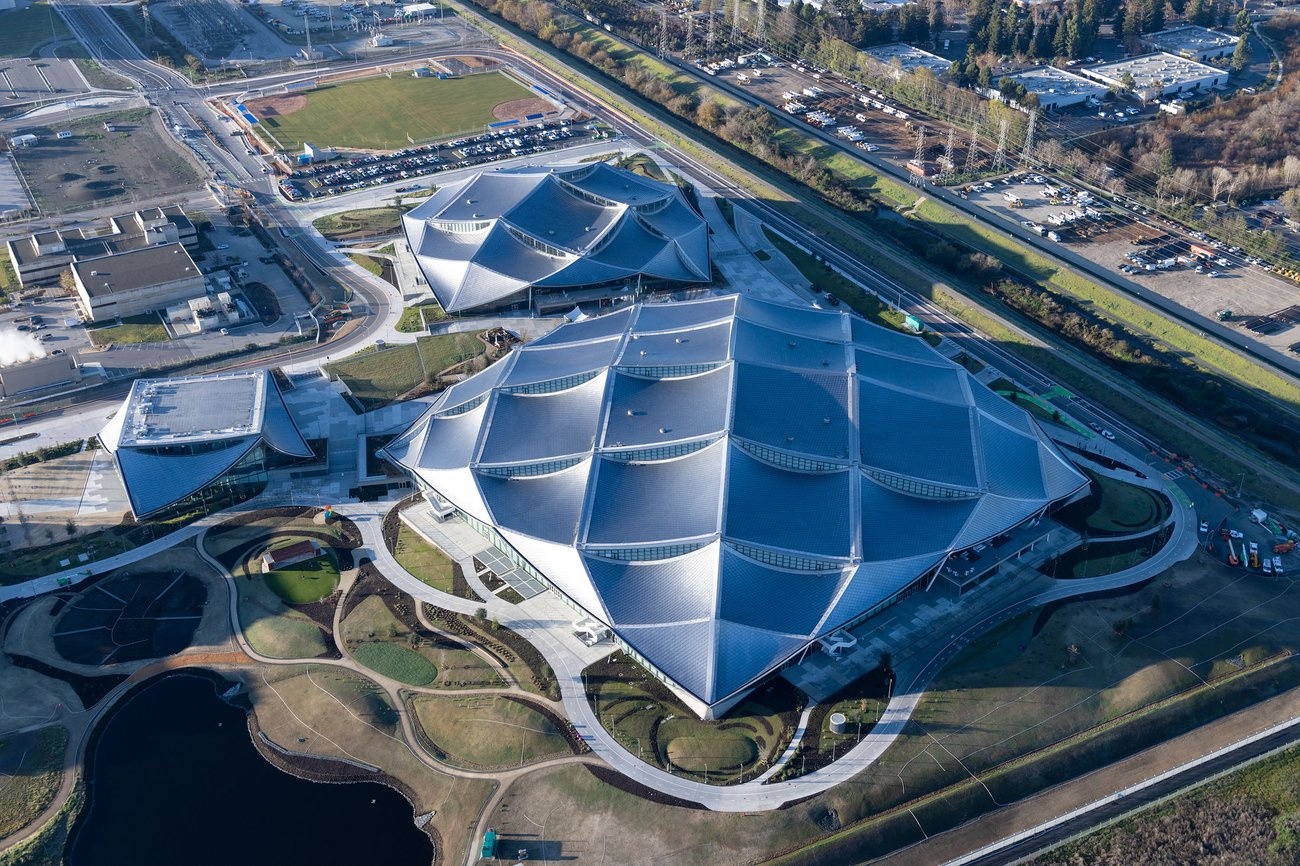
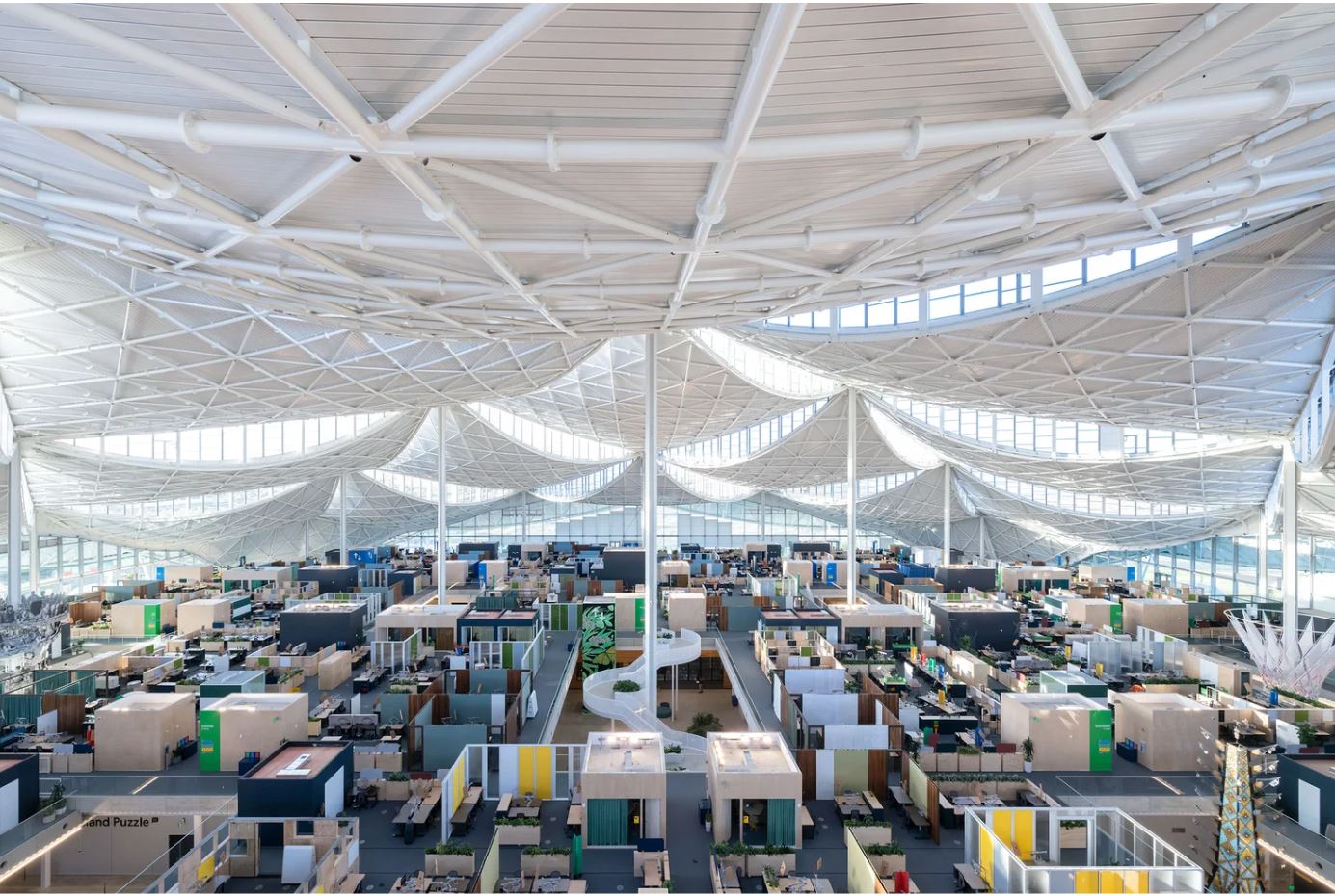
Architects: BIG + Heatherwick Studio | Completed: 2022 | Built-up: 1.1 million sq. ft.
Google's Bay View and Charleston East campuses bring a new dimension to sustainable, human-centric architecture. Designed as lightweight canopy structures, the buildings mimic the fluid topography of the surrounding landscape, allowing daylight to pour into every workspace.
Fully electric and operating on carbon-free energy, these campuses integrate wetlands, open parks, and public walkways into their master plan. The interiors feature moveable partitions and “team neighborhoods,” dissolving hierarchy and enabling flexibility.
Here, sustainability is not an add-on, it's the foundation. The architecture anticipates Google's ambition to make every office a model of energy and emotional intelligence.
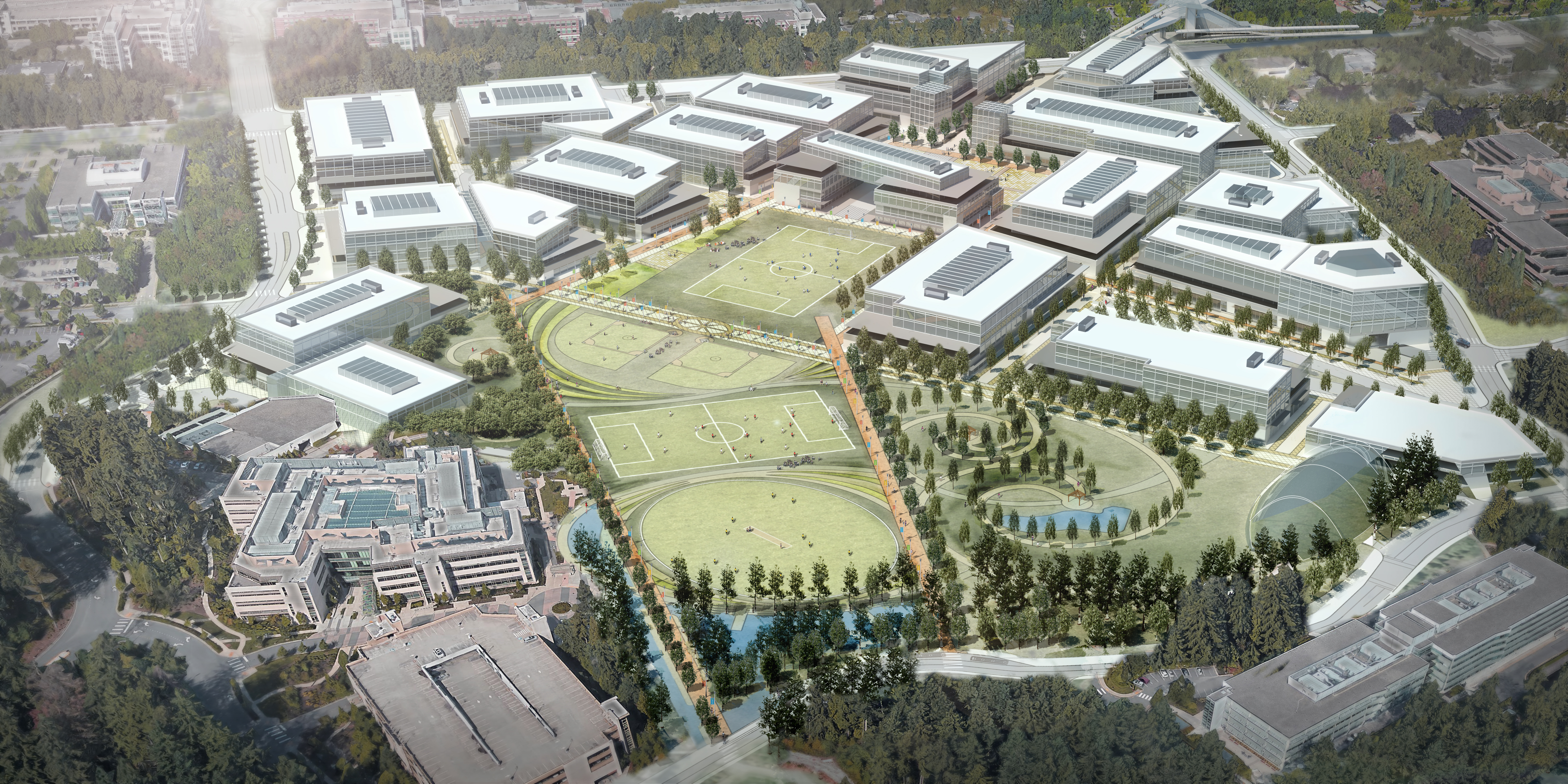
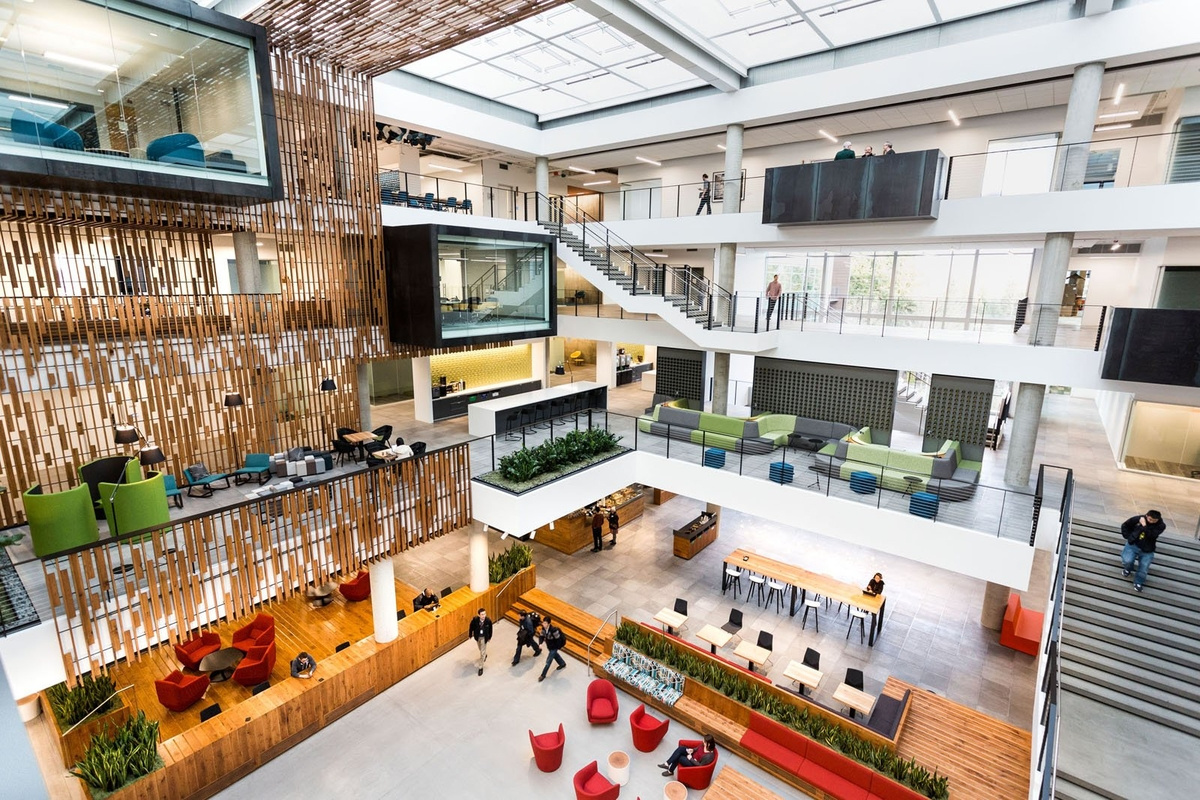
Architects: Gensler + SOM + consortium | Redeveloped: 2024 | Built-up: >3 million sq. ft.
Microsoft's Redmond campus renewal represents a complete rethink of how corporate infrastructure can respond to the hybrid age. Spread across 72 acres, the new 17-building master plan integrates geothermal energy, daylight wells, and vast green commons.
The campus feels like a smart city within a park. Underground mobility systems and bike-friendly avenues promote sustainability, while sensory-responsive zones support neurodiverse workstyles.
The result: a flexible, data-driven environment where technology, inclusion, and design coexist reflecting Microsoft's mission to “empower every person and organization to achieve more.”
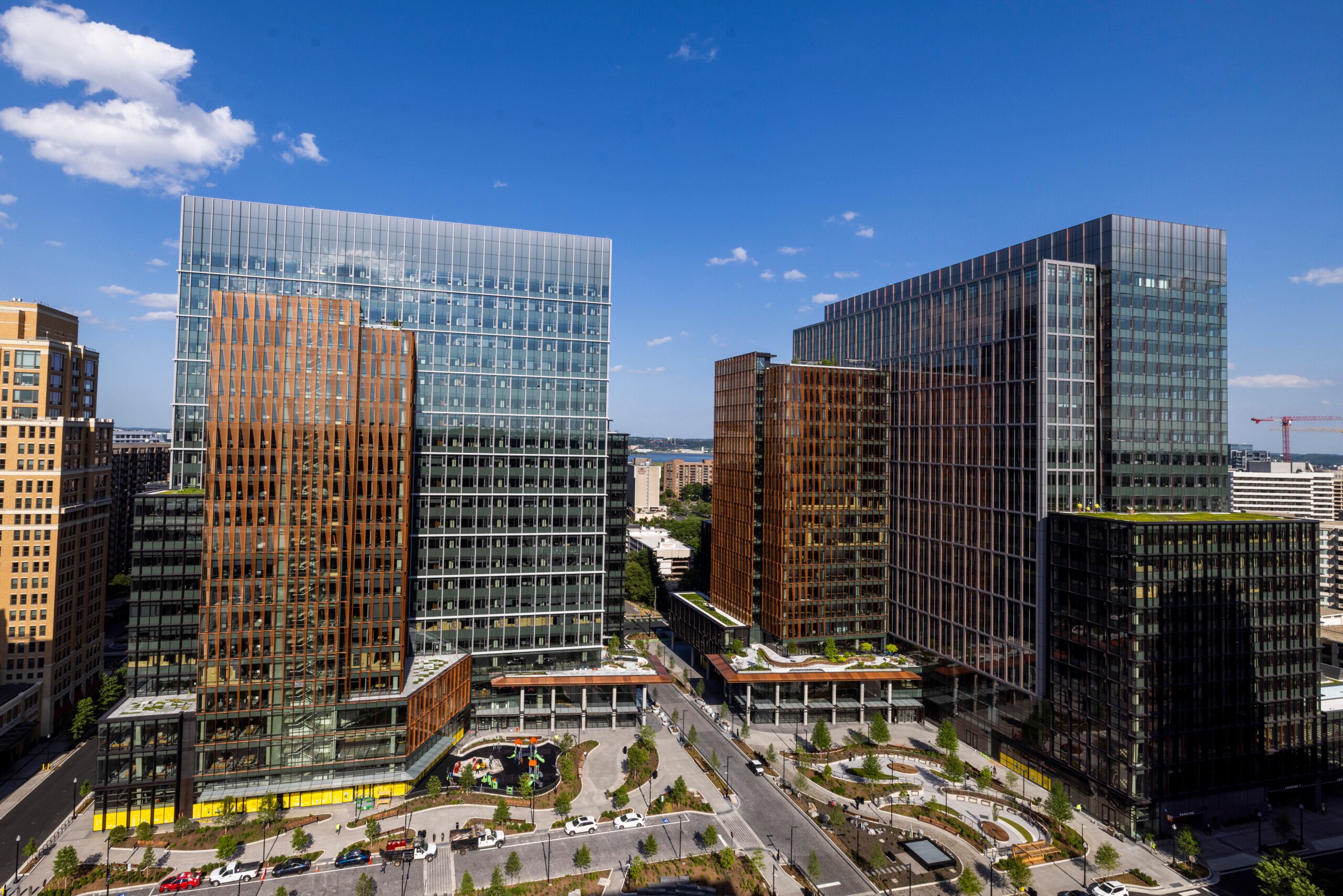
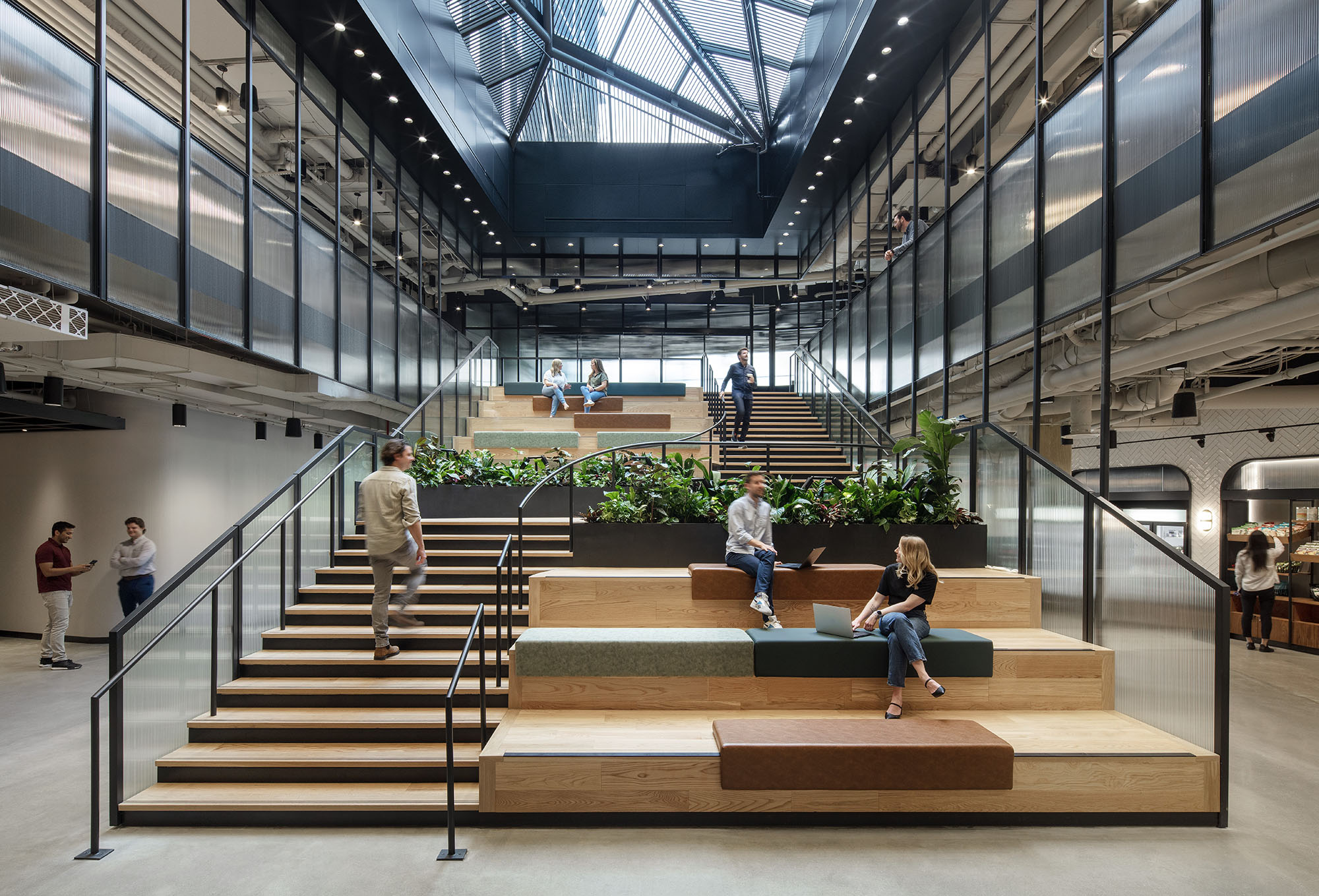
Architect: ZGF and JBG Smith | Completed (Phase 1): 2023 | Built-up: ~2.1 million sq. ft.
Amazon's HQ2 is as much a public space as it is a workplace. Its signature structure, “The Helix”, is a spiraling tower wrapped in trees, where employees can literally walk through nature during meetings.
Two glass towers frame a 2.5-acre park with amphitheatres, dog runs, and cafés open to the community. The interiors blend industrial authenticity (concrete and steel) with biophilic warmth (wood and greenery).
More than just an office, it's a civic experience, a new paradigm where corporate campuses become part of the urban commons.
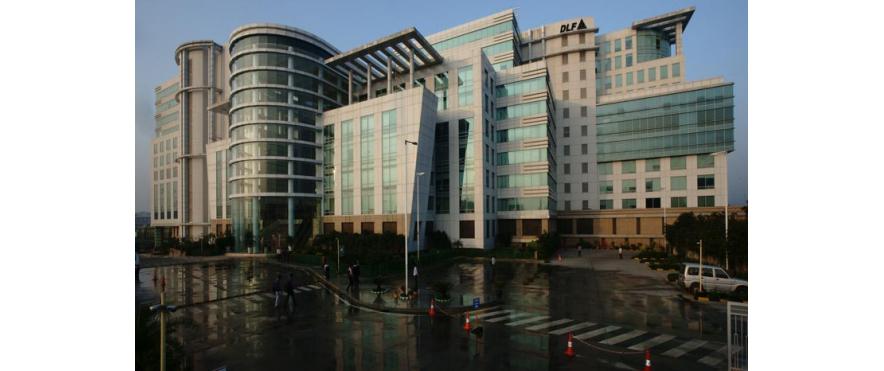
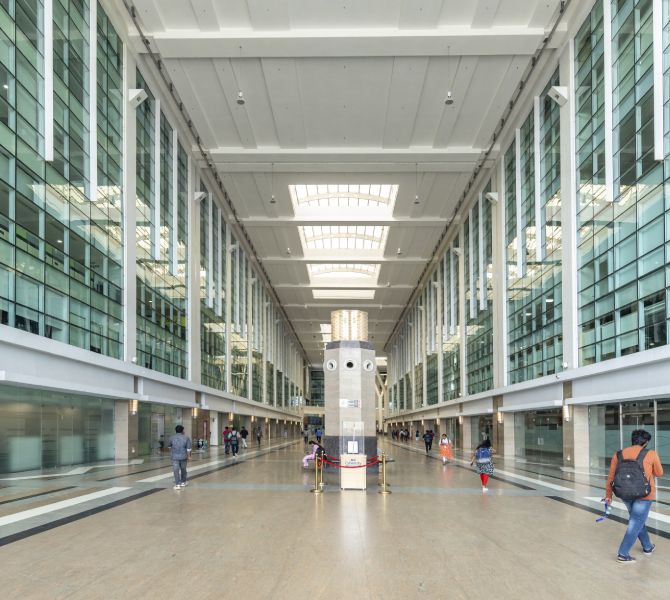
Architects: Hafeez Contractor, RSP Design, Morphogenesis | Completed: 2015–2023 | Built-up: ~3 million sq. ft.
DLF Cyber City Hyderabad is India's greenest workplace, the first to achieve LEED Zero Energy, Water, and Waste certifications. Spread across 30 acres, its sleek glass towers are interlinked through landscaped plazas, shaded walkways, and podium gardens that prioritize pedestrian movement.
Each building is oriented for optimal daylight and minimal heat gain. Below the surface, infrastructure works quietly; electric systems, recycled water loops, and waste-to-energy plants.
Inside, column-free floorplates, collaborative lounges, and daycare centers promote both efficiency and empathy. This is sustainability not as compliance, but as culture.
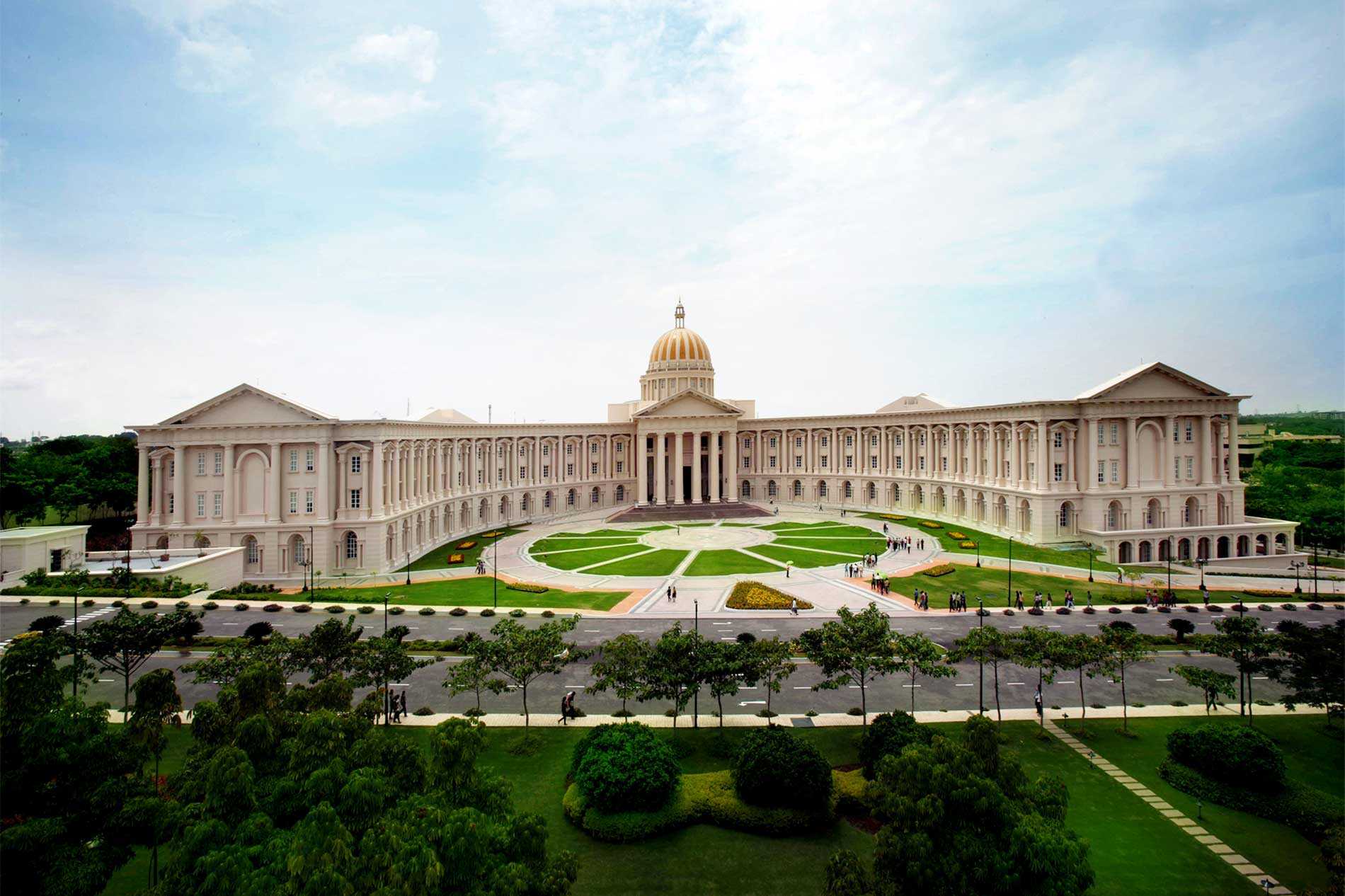
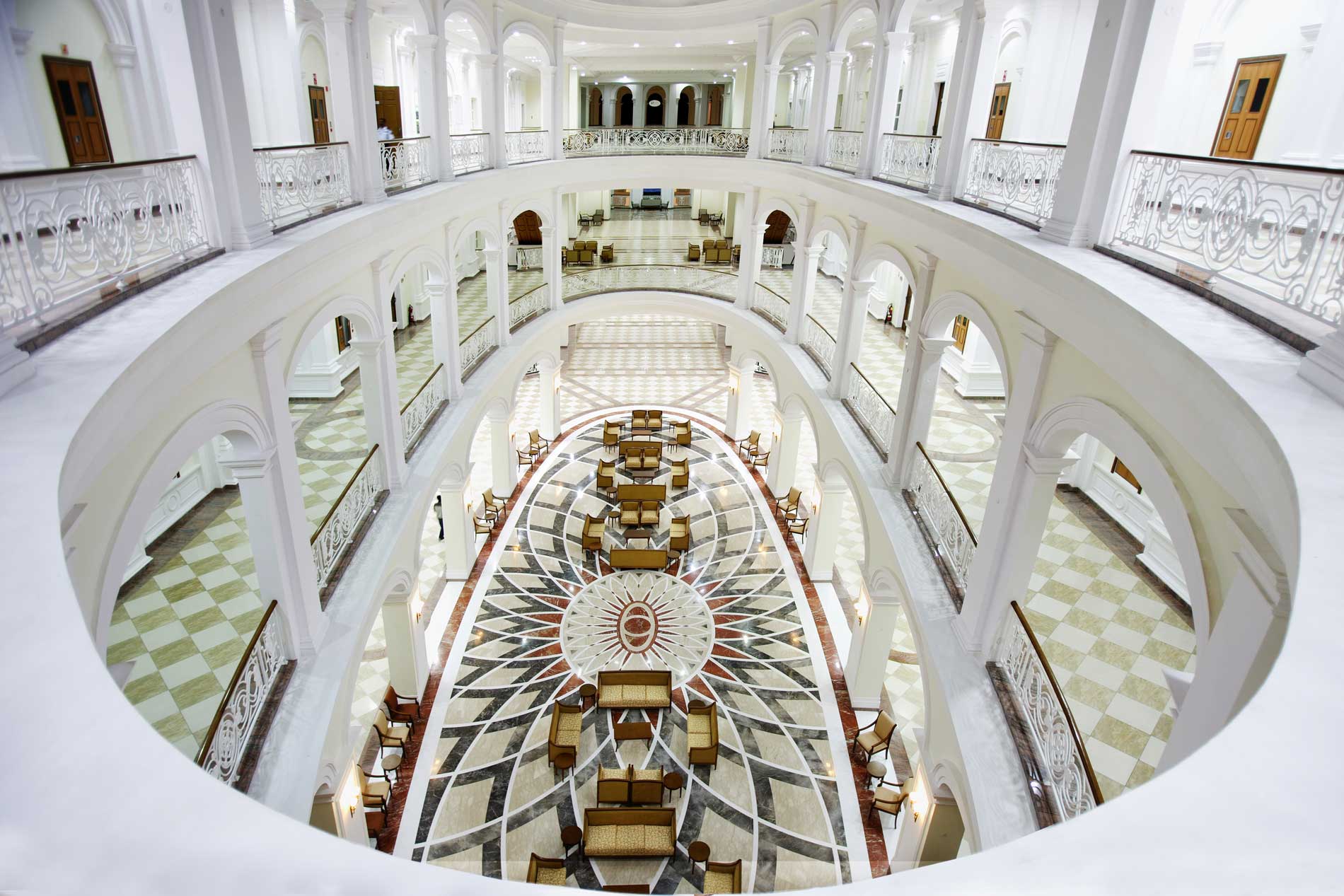
Architect: Hafeez Contractor | Completed: 2005 | Built-up: ~3 million sq. ft.
Set across 337 acres, the Infosys Global Education Centre is an architectural ode to learning. Neo-classical domes, colonnades, and symmetry lend it the air of an academic institution, while its functionality serves as a training ground for 15,000 professionals at a time.
Grand atria, marble corridors, and sunlight-filled halls merge corporate modernity with timeless gravitas. With auditoriums, hostels, and libraries under one ecosystem, the campus is a metaphor for Infosys itself, rigorous, visionary, and deeply rooted in education as a way of life.
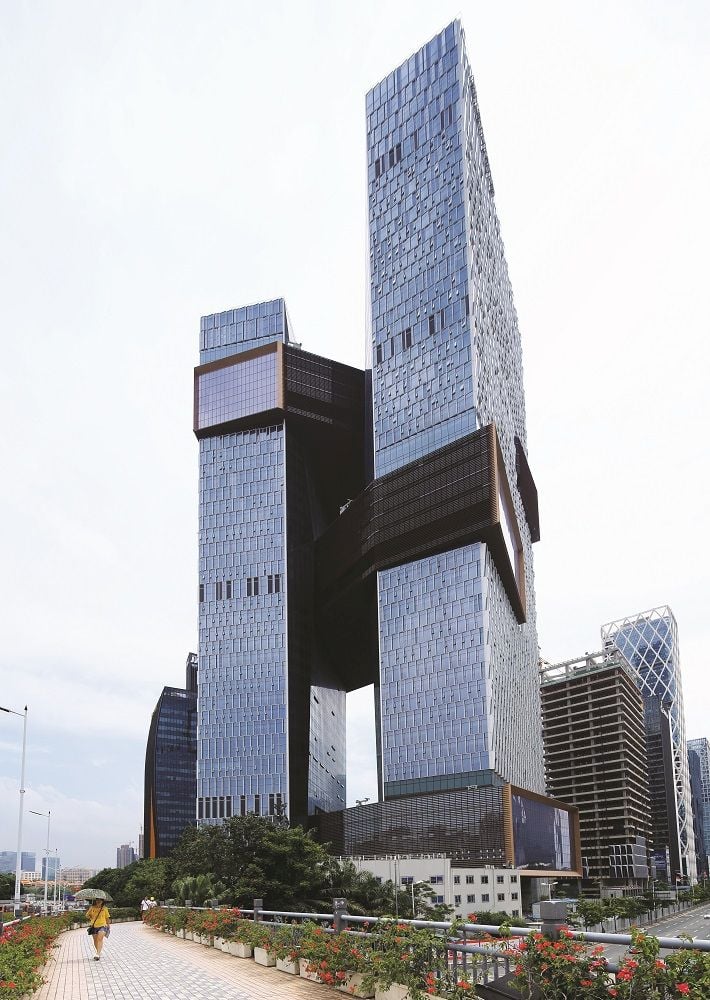
Architect: NBBJ | Completed: 2017 | Built-up: ~3.8 million sq. ft.
Tencent's twin towers rise from the Shenzhen coast like circuit boards come to life, connected by three skybridges named Energy, Knowledge, and Health. These bridges are not mere connectors but active collaboration zones, integrating gyms, cafés, and meeting pods.
Behind the futuristic glass façade lies a digital nervous system powered by sensors, robotics, and AI-driven energy optimization. It's architecture as a reflection of software: constantly learning, evolving, and connecting, the perfect spatial metaphor for one of the world's largest tech ecosystems.
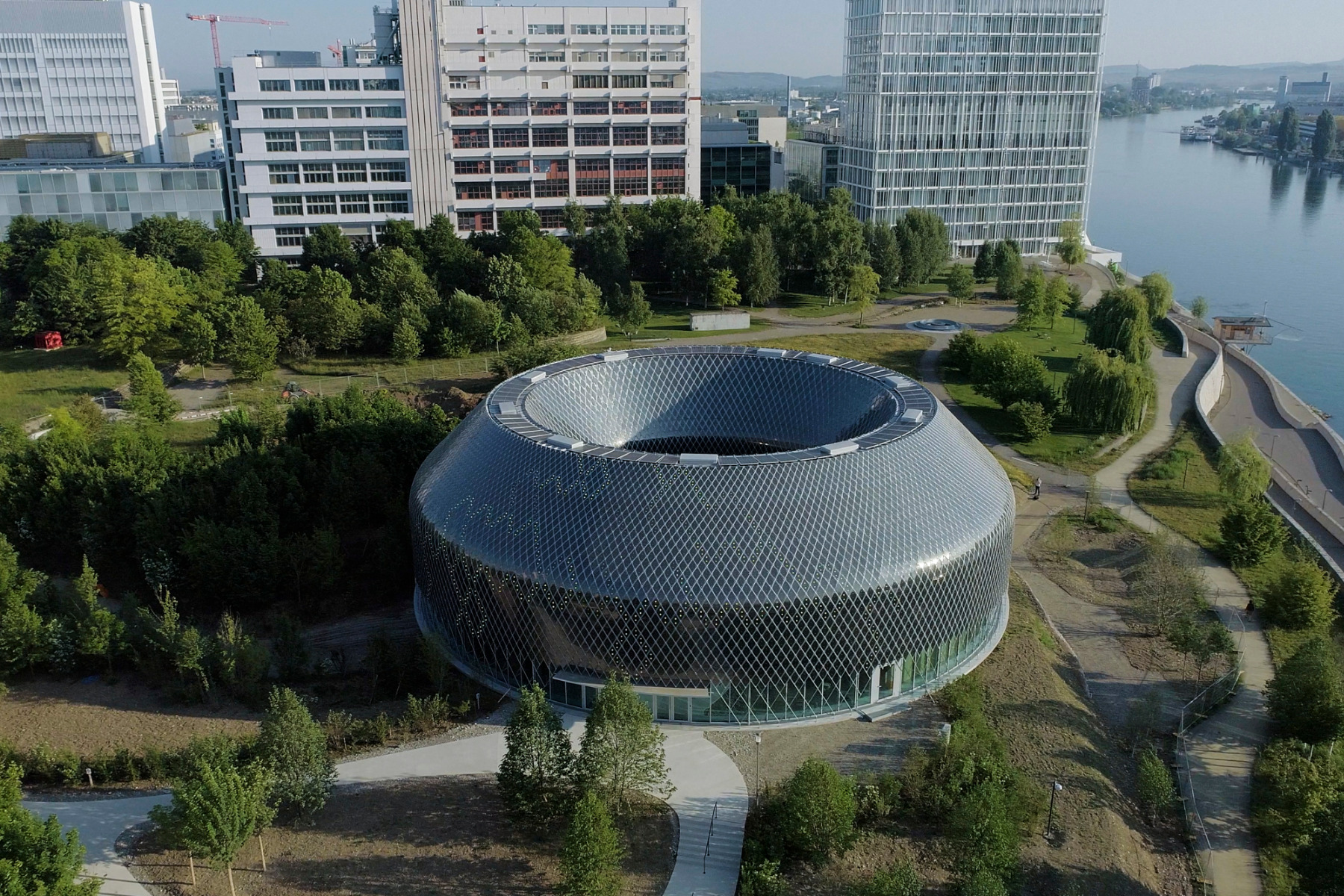
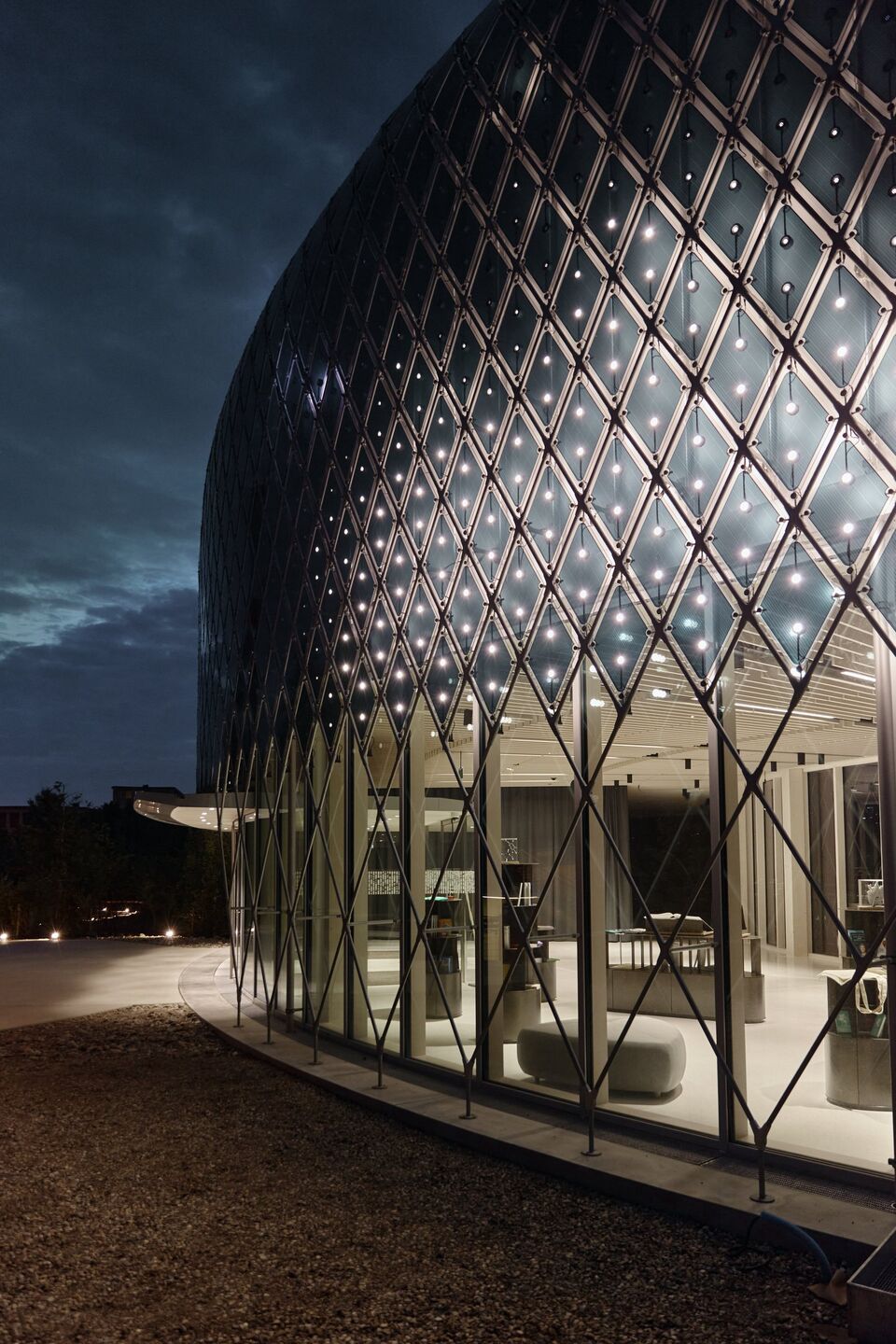
Architectural Collective: Vittorio Lampugnani, Frank Gehry, Herzog & de Meuron, Tadao Ando | Built: 2006–2020 | Land Area: 50 acres
Few campuses are as intellectually ambitious as Novartis's Basel headquarters. Conceived as a “city of knowledge,” it brings together a constellation of architectural masters, each designing one building within a coherent master plan.
The result is a walkable urban grid of laboratories, offices, and courtyards infused with art and light. Concrete minimalism, glass transparency, and green promenades foster collaboration across disciplines. In its architecture, Novartis manifests the spirit of scientific curiosity; rational, beautiful, and profoundly human.
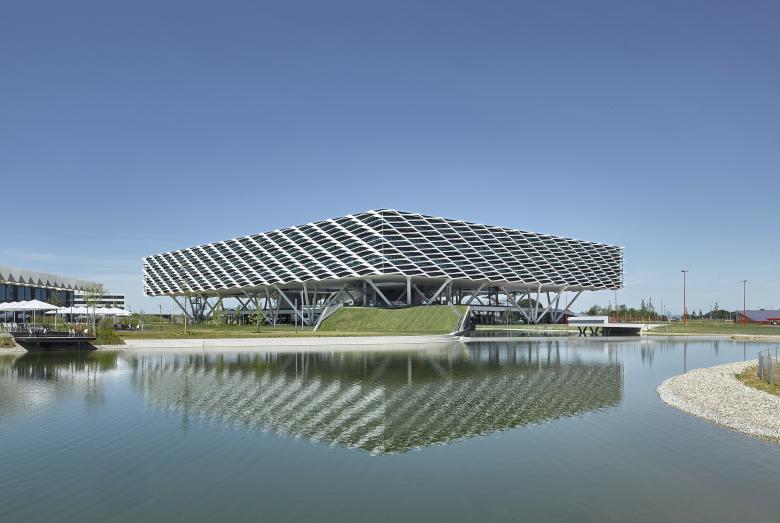
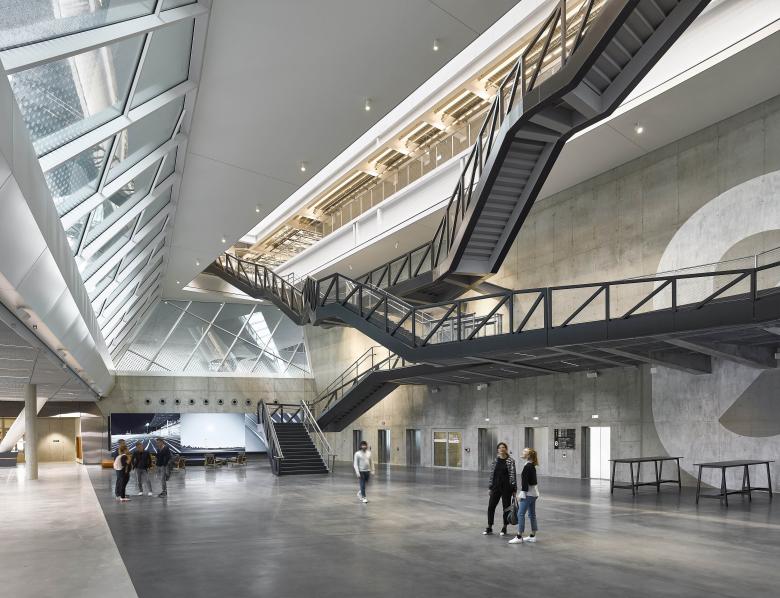
Architect: Behnisch Architekten, COBE | Built: 2011–2019 | Land Area: 140 acres
At adidas's World of Sports campus, architecture performs like an athlete. The Arena building, a glass “floating box” suspended above the ground, welcomes visitors into a world where motion defines form.
Sun-control systems, recyclable materials, and a dramatic steel structure embody both engineering and emotion. Inside, a grand stair doubles as a stadium, and materials like oak and felt evoke warmth amid precision. This is brand architecture at its finest: dynamic, sustainable, and unapologetically expressive.
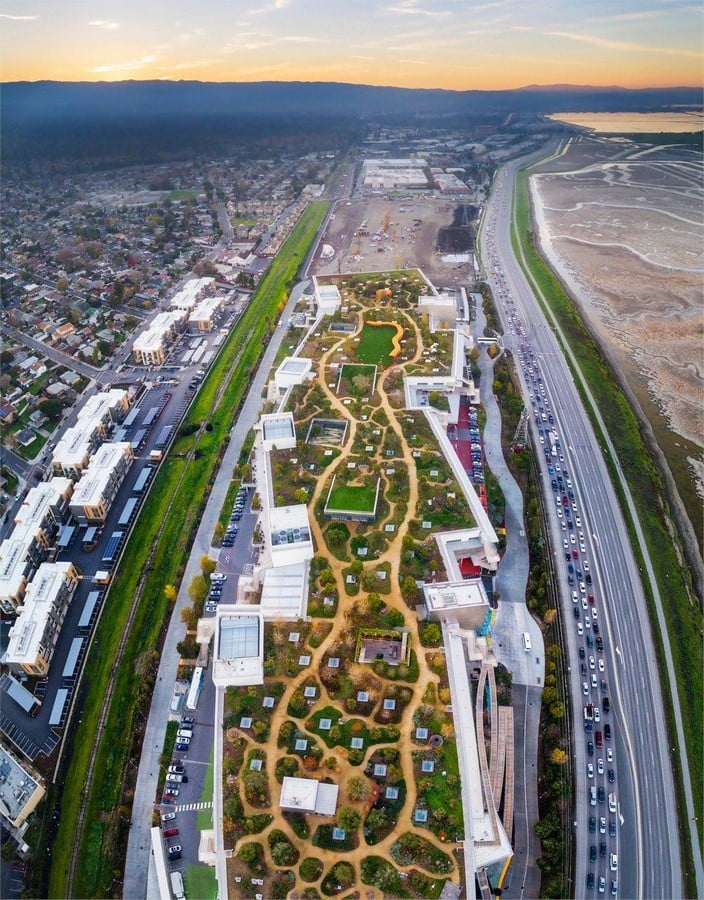
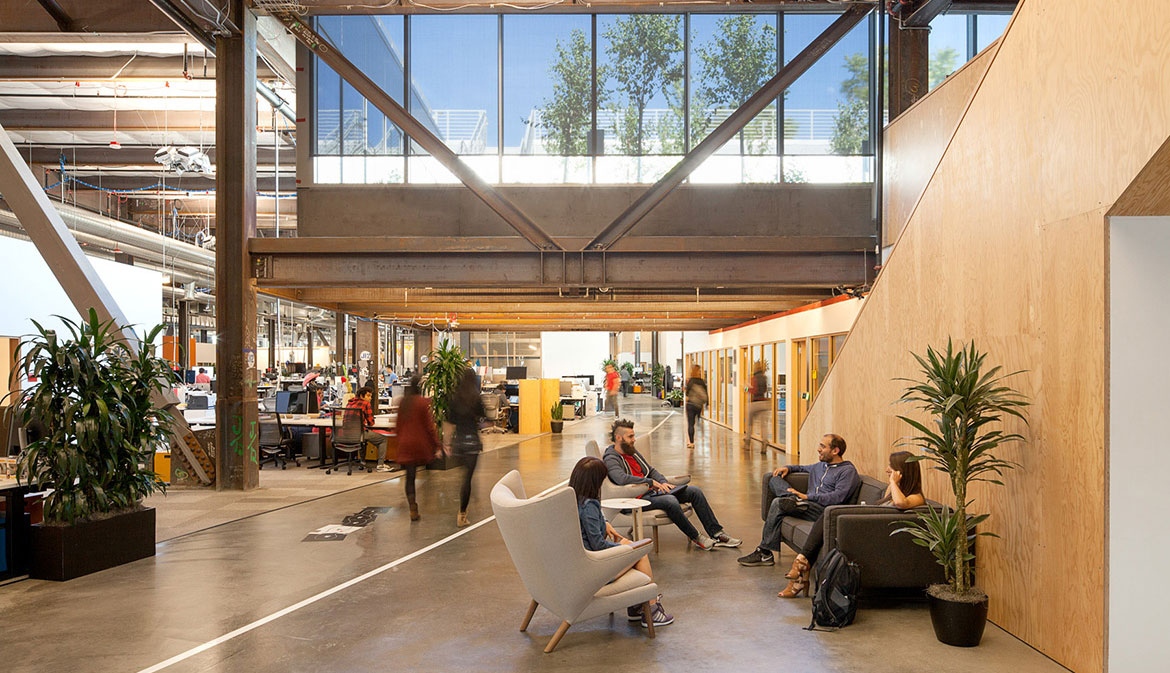
Architect: Frank Gehry | Completed: 2018 | Built-up: ~0.4 million sq. ft.
Meta's Menlo Park campus, MPK20, strips the office down to its essence: people, light, and connection. Gehry's “unfinished” aesthetic uses exposed beams, plywood, and murals to celebrate imperfection and authenticity.
The single-level workspace eliminates hierarchy, while a 9-acre rooftop park reconnects employees with nature. Every corridor, every corner, is meant to spark casual encounters embodying the creative energy that powers the social media age.
It's less an office, more an ecosystem of ideas, a raw canvas for innovation.
From Cupertino's perfect ring to Hyderabad's zero-waste city, from Shenzhen's digital towers to Basel's architectural symphony, each of these campuses tells a story of how the workplace has evolved from function to philosophy.
These are not just buildings; they are belief systems built in concrete, glass, and light. They speak of a world where architecture choreographs collaboration, where sustainability equals intelligence, and where design is an act of empathy.
As work continues to transform, these spaces remind us of something timeless, that innovation, at its best, is still profoundly human.

Published: December 16, 2025
Discover more insights and expert perspectives on commercial real estate and business growth

Copyright © 2026. All rights reserved.