
 Contact us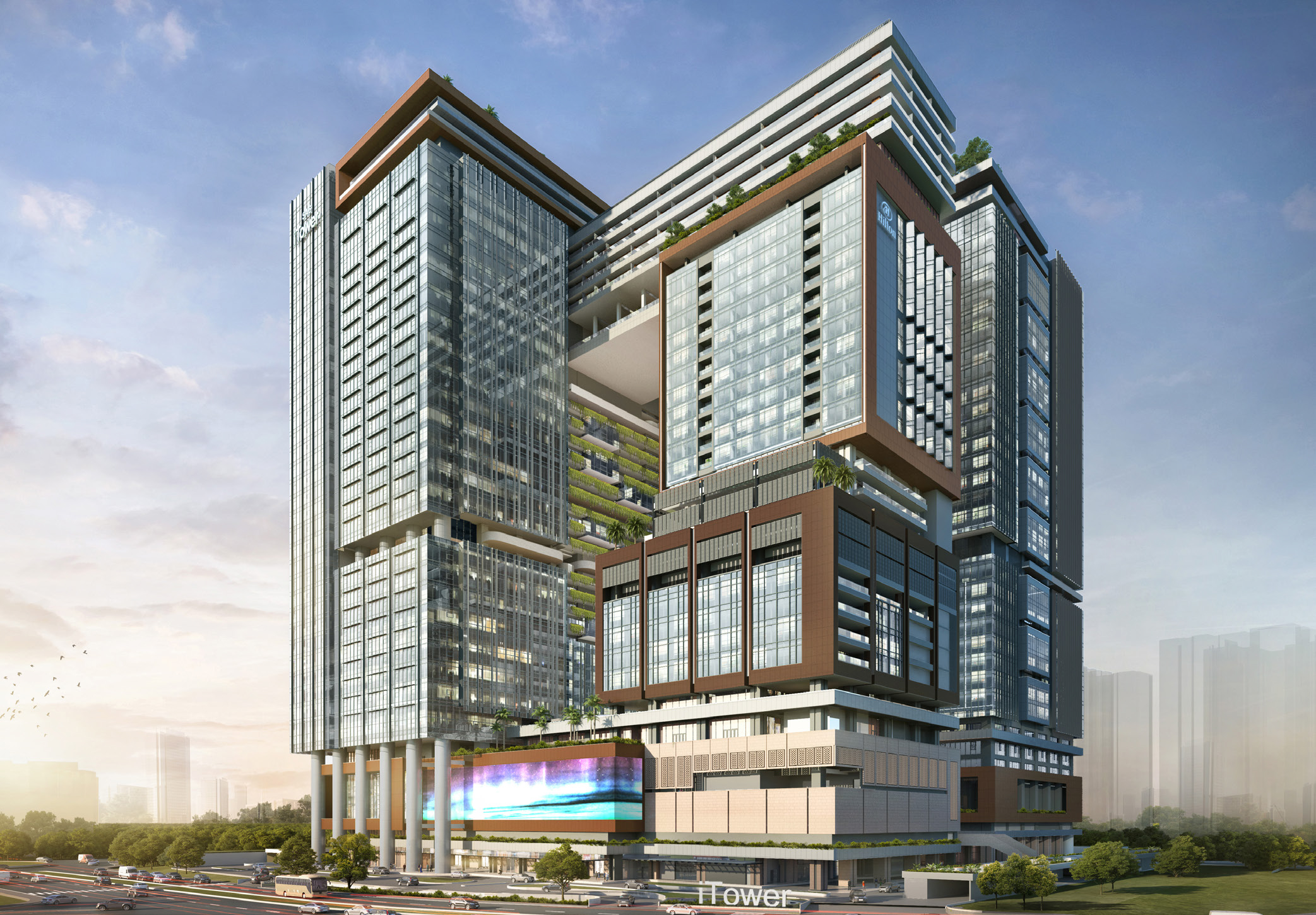

May 4, 2026•5 min read
GCC Bangalore vs Hyderabad: What the Deal Data Actually Tells You About India's Two Dominant GCC Cities
Read More
Written by: Aaradhna Mangla
Published at: 11/16/25
In a world that increasingly celebrates digital minimalism and remote work, there's something profoundly human about building big. From the monumental Pentagon in the 1940s to the futuristic towers of India and Japan today, the evolution of large-scale office developments reveals much more than ambition; it mirrors the way we construct productivity itself.
These architectural giants, blending design, engineering, and environmental consciousness, tell the story of how office spaces have transformed from functional shells into living ecosystems. They are physical expressions of collaboration, identity, and aspiration. Let's explore how the ten largest office buildings in the world were conceived, built, and why they matter in the modern architectural narrative.
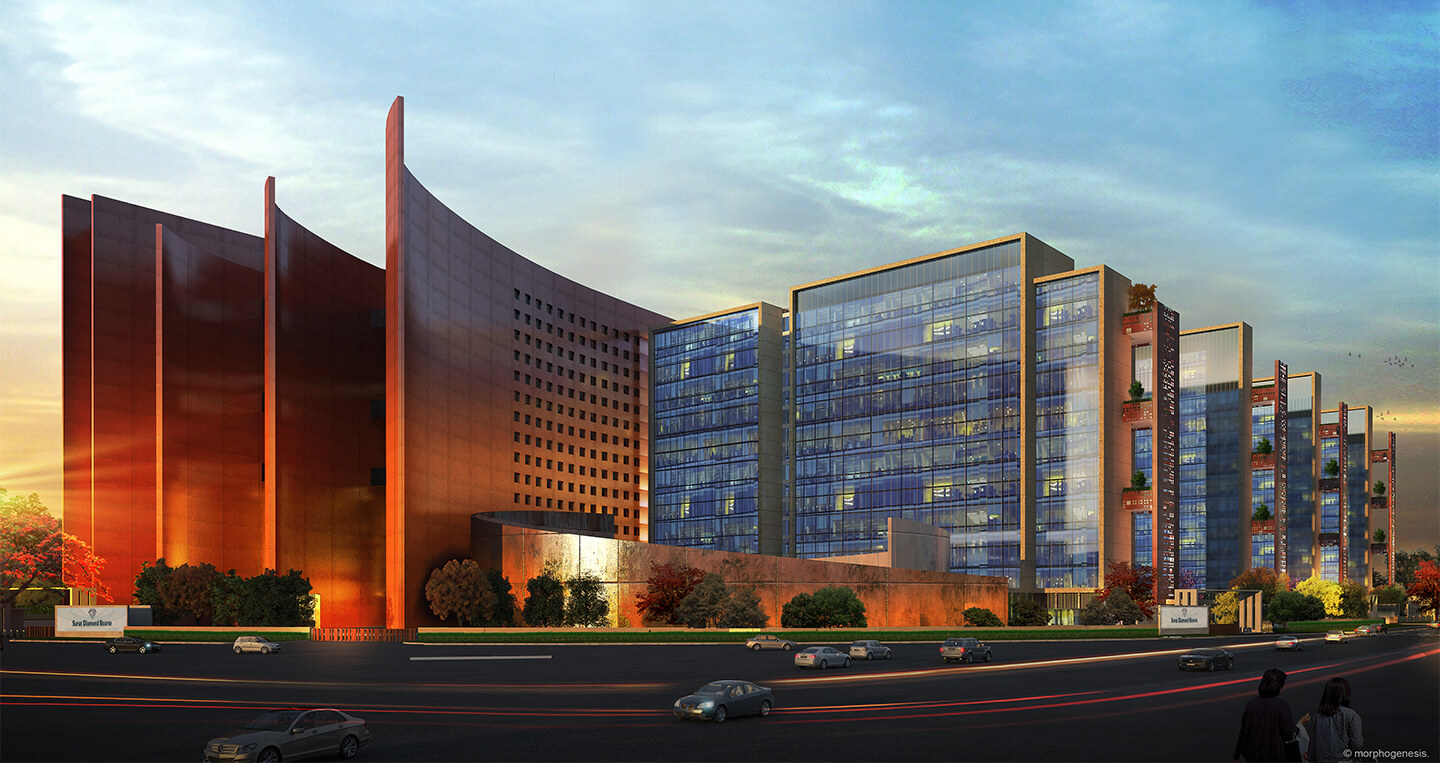
Location: Surat, Gujarat
Area: 660,000 m² (approx. 7.1 million ft²)
Completed: 2023
Designed by: Morphogenesis
Function: Global diamond trading and export hub
Inaugurated in 2023, the Surat Diamond Bourse (SDB) redefines what a business district can be. Sprawling across 35 acres and comprising nine interconnected towers, it officially overtook the Pentagon as the largest office building in the world. The project was conceived to consolidate India's diamond trading ecosystem under one roof, from polishing to exports, housing 4,700 offices and over 65,000 professionals daily.
Developed by the Surat Diamond Bourse Co-operative Society and designed by Morphogenesis, the SDB exemplifies India's rise as a high-value manufacturing and trading hub. Its LEED-grade sustainability features, such as passive cooling, solar power, and daylight optimization, highlight a clear pivot toward environmentally conscious infrastructure. Beyond scale, the Bourse is a social city in itself, complete with food courts, gardens, and security systems, reflecting how India is evolving from an outsourcing economy to a global command center.
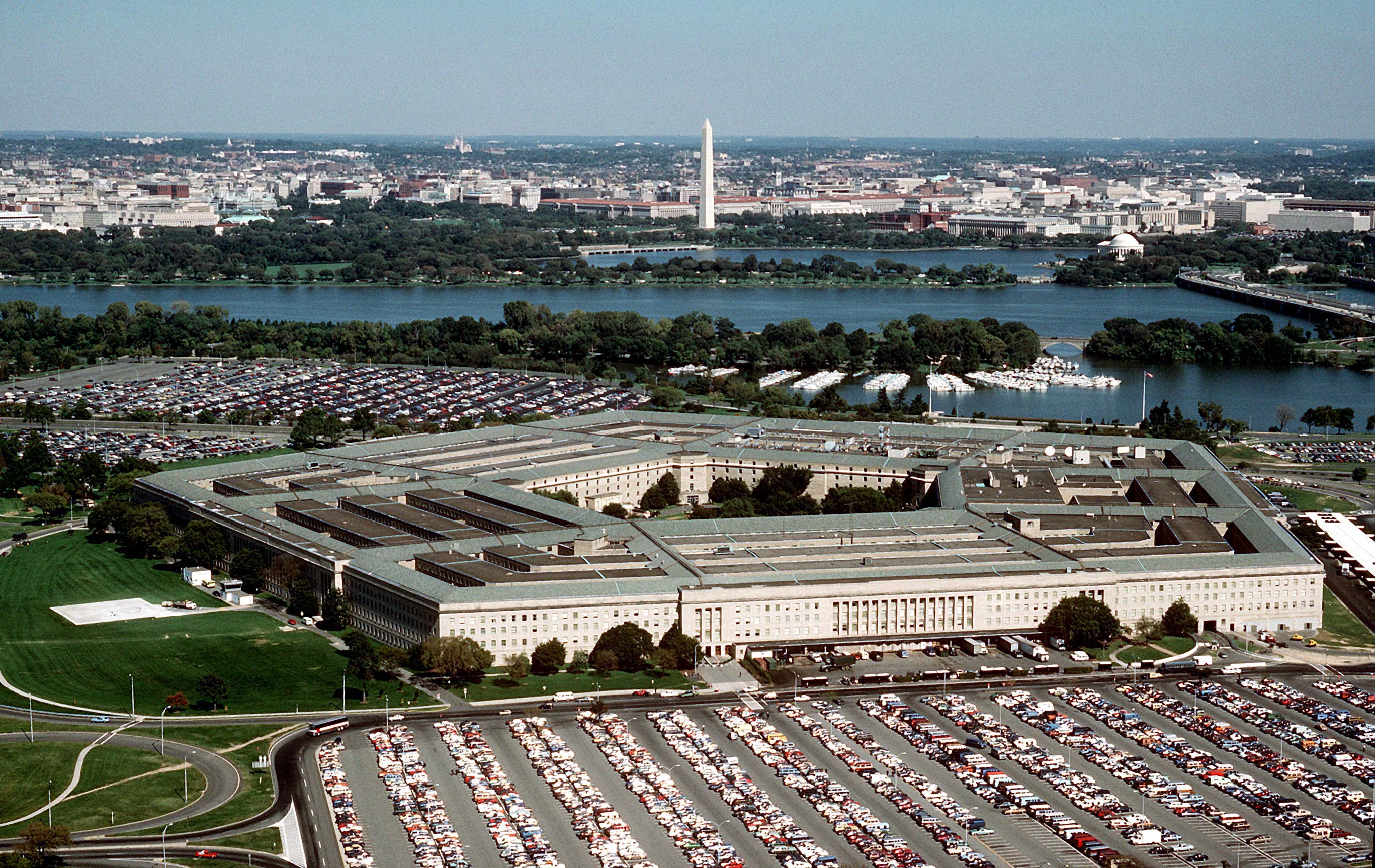
Location: Arlington, Virginia
Area: 620,000 m² (approx. 6.6 million ft²)
Completed: 1943
Designed by: George Bergstrom
Function: Headquarters of the U.S. Department of Defense
Few buildings in the world are as instantly recognizable as the Pentagon. When it was completed during World War II in a record 16 months, it stood as a masterclass in functional efficiency as well as the largest office building in the world. The five-sided geometry was chosen to maximize floor space on a constrained site and now accommodates 26,000 military and civilian personnel, plus 3,000 support staff. For nearly
It's 17.5 miles of corridors are organized so logically that no point is more than a seven-minute walk from another. Following the tragic 9/11 attack, the damaged section was rebuilt within a year in an effort called the “Phoenix Project” that was supposed to symbolize the resilience of American institutions. Nearly 80 years later, the Pentagon remains not just a building, but a statement of enduring order and operational command as well as the largest office building in the USA.
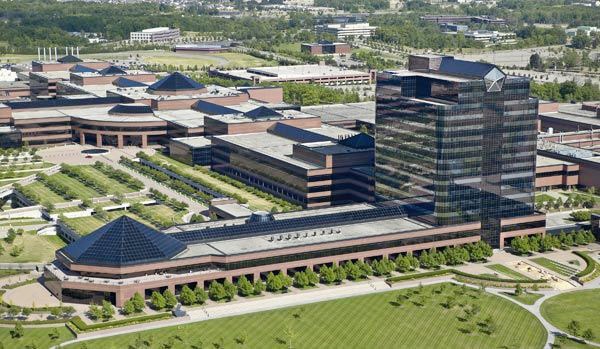
Location: Auburn Hills, Michigan
Area: 490,000 m² (approx. 5.27 million ft²)
Completed: 1996
Designed by: SmithGroup
Function: Automotive R&D and corporate HQ
When Chrysler opened its World Headquarters & Technology Center in 1996, it blurred the boundaries between corporate offices and industrial R&D labs. Spread across 504 acres, it integrates corporate towers, vehicle test labs, wind tunnels, and innovation zones, bringing engineers, designers, and executives together under one roof.
The site employs over 15,000 professionals, embodying the golden age of Detroit's automotive innovation. Even today, as part of Stellantis, it remains one of the most complete examples of an industrial campus that fosters both creativity and collaboration, an architectural reflection of how infrastructure can inspire innovation.
Location: Financial District, Hyderabad
Area: 480,000 m² (approx. 5.16 million ft²)
Completion: 2026 (expected)
Developed by: SAS Infra; designed by SEP Architects & Aedas
Function: IT and corporate offices
The upcoming SAS iTower is Hyderabad's bold step into the next generation of commercial real estate. Developed by SAS Infra, the project is set to be one of India's largest commercial towers and is already pre-certified as LEED Platinum.
With smart energy management, panoramic city views, and flexible floorplates catering to IT, fintech, and global capability centers, it reflects how Indian cities are evolving beyond conventional office clusters. Hyderabad, now India's second-largest office market after Bengaluru, continues to attract multinational occupiers seeking efficiency, sustainability, and infrastructure synergy. SAS iTower embodies that convergence of design intelligence and market demand.
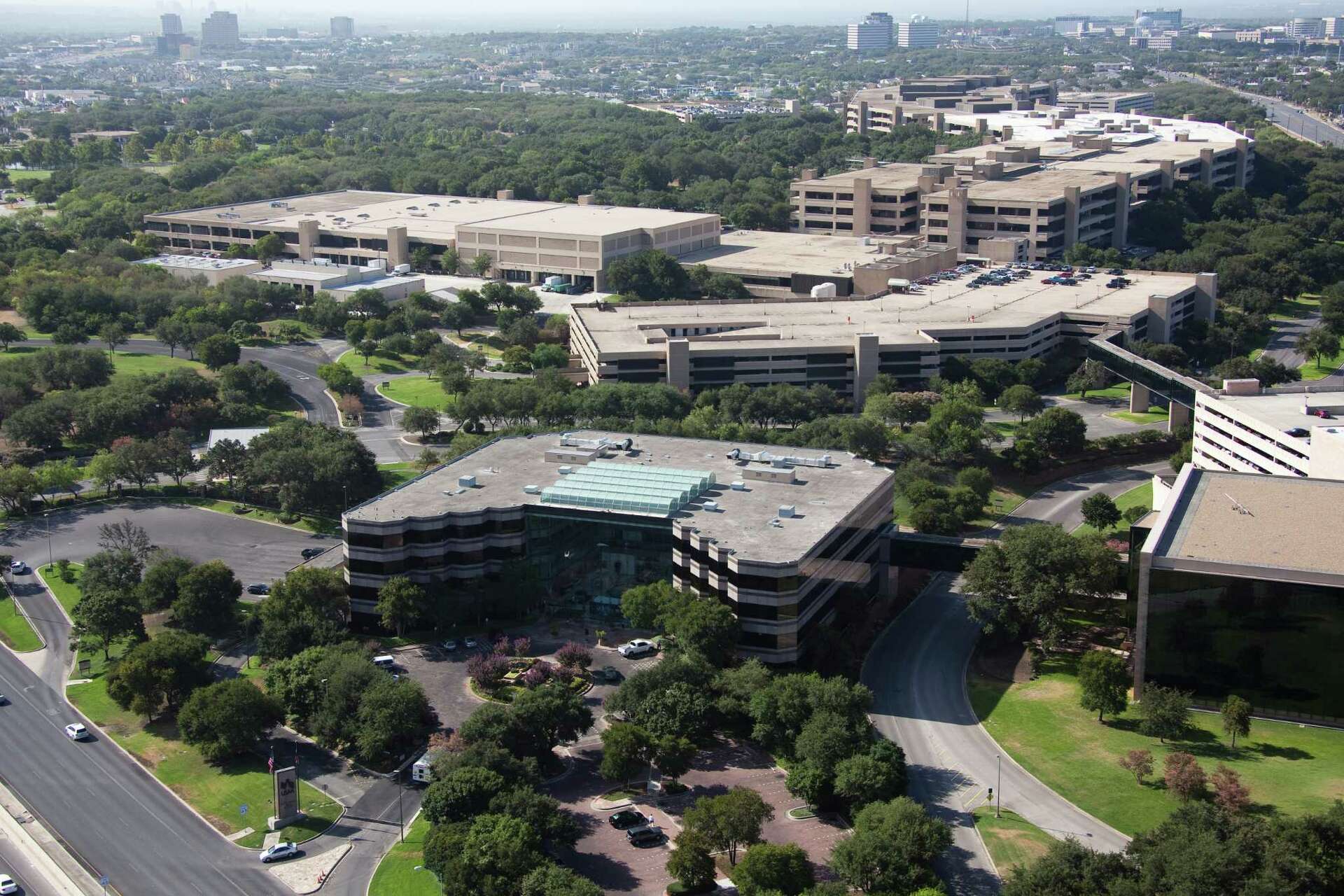
Location: San Antonio, Texas
Area: 476,000 m² (approx. 5.12 million ft²)
Completed: 1976
Developed by: USAA
Function: Financial services and insurance
In contrast to the high-rise archetype, the USAA Corporate Headquarters spreads horizontally over 280 acres, connected by a network of bridges and courtyards. Housing 15,000 employees, this campus was ahead of its time in embedding wellness into workspace design with fitness centers, green courtyards, and natural lighting integrated throughout.
Built in the 1970s, it was among the first to realize that employee experience is part of productivity infrastructure. Even today, its low-rise sprawl and open layout continue to influence modern campus designs, emphasizing community over hierarchy.
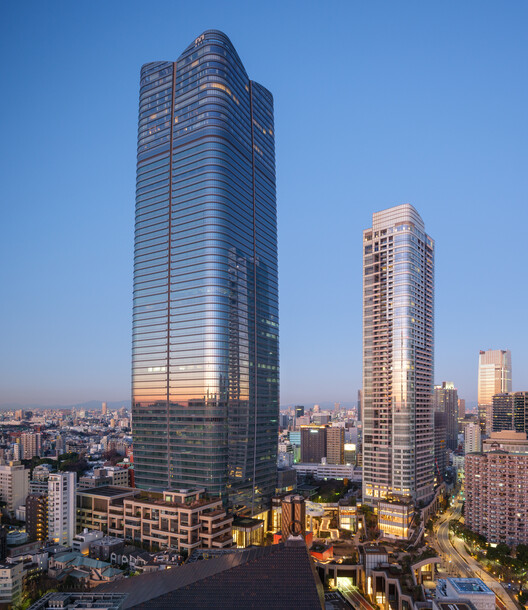
Location: Tokyo, Japan
Area: 461,774 m² (approx. 4.97 million ft²)
Completed: 2023
Developed by: Mori Building Company
Function: Mixed-use urban hub
Standing 330 meters tall, the Mori JP Tower is Japan's tallest building and the centerpiece of the Azabudai Hills redevelopment. Conceived as a “city within a city,” it combines office spaces, luxury residences, schools, retail, and art galleries.
The tower's design revolves around green living and community interaction, integrating 2.4 hectares of landscaped plazas that blur the boundary between work and life. In a city known for density, the Mori JP Tower reimagines verticality not as isolation, but as integration. It's Tokyo's manifesto for a humane, sustainable megacity.
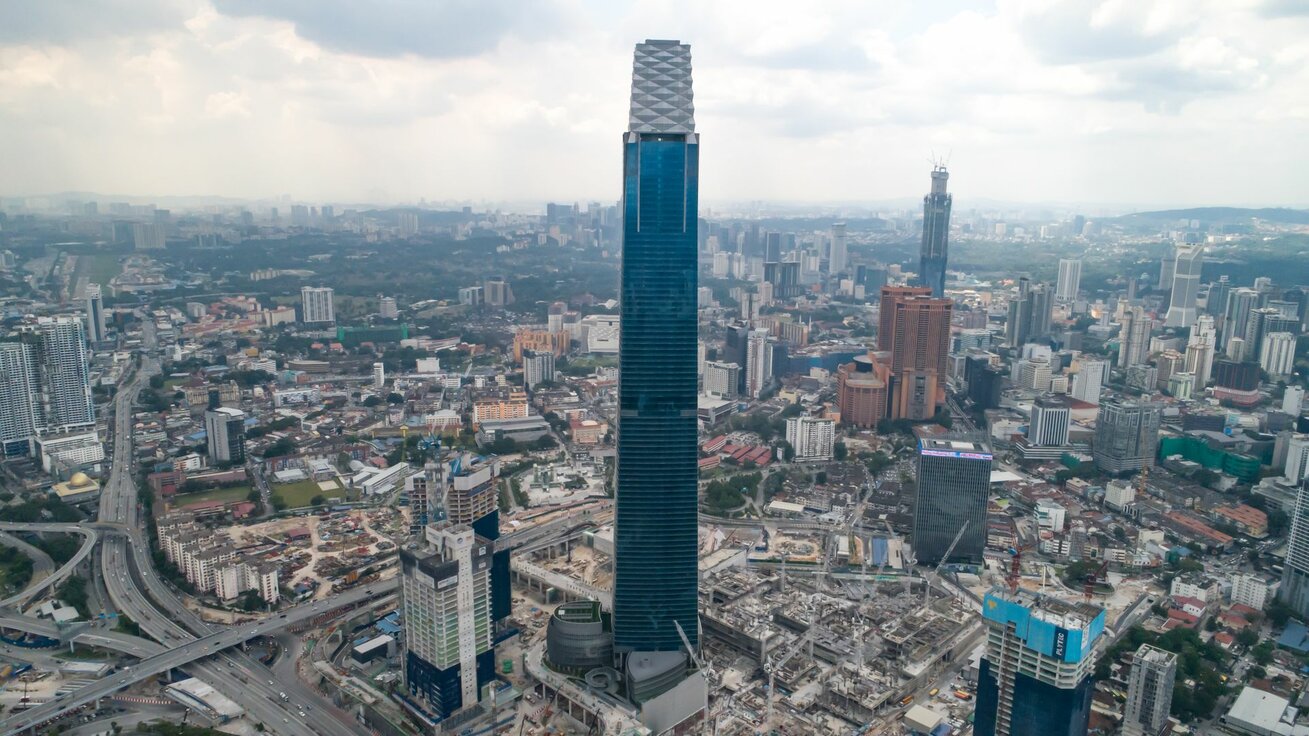
Location: Kuala Lumpur
Area: 453,835 m² (4.88 million ft²)
Completed: 2019
Developed by: Mulia Group (Indonesia)
Function: Financial and corporate offices
The Exchange 106 anchors the Tun Razak Exchange (TRX), Malaysia's new international financial district. Rising 454 meters with 106 floors, it's designed for global banks and corporate tenants seeking Grade A office quality with Southeast Asian flair.
Developed by Indonesia's Mulia Group, it features column-free floorplates up to 34,000 ft², catering to the flexible workspace trend. Its prominence on Kuala Lumpur's skyline, alongside the Petronas Towers, signals Malaysia's ambition to become a key regional business hub.
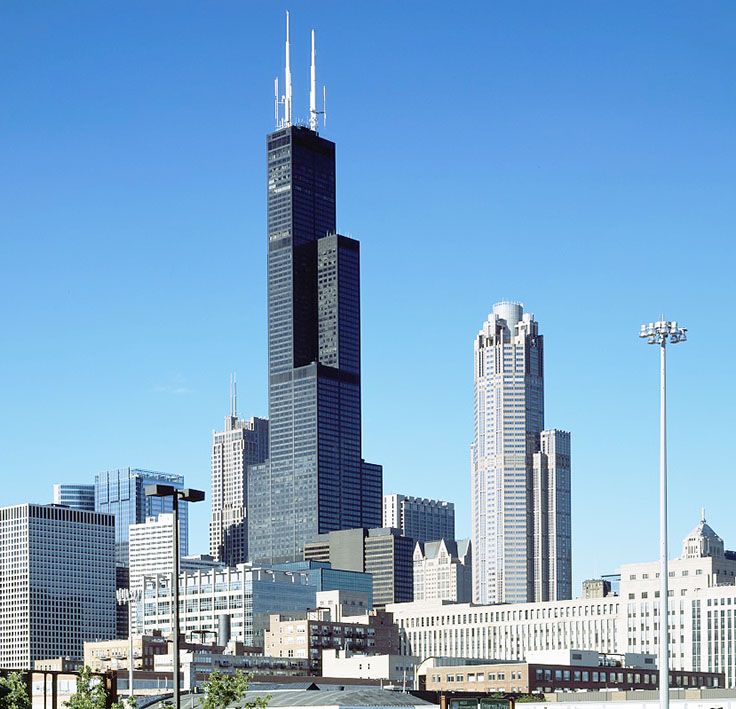
Location: Chicago, Illinois
Area: 416,000 m² (approx. 4.47 million ft²)
Completed: 1973
Designed by: Skidmore, Owings & Merrill (SOM)
Function: Financial, technology, and media offices
For a quarter-century, the Willis Tower stood as the world's tallest building and an engineering marvel that defined Chicago's skyline. Originally commissioned by Sears, Roebuck & Co., it exemplified the modernist ethos: bold geometry, structural innovation, and corporate confidence.
Today, it houses over 10,000 employees across finance, tech, and media sectors. Its Skydeck observatory attracts nearly two million visitors annually, showing how workplaces can also become cultural landmarks. The building's recent modernization added green roofs and wellness amenities, proof that even the most iconic structures can evolve with time.
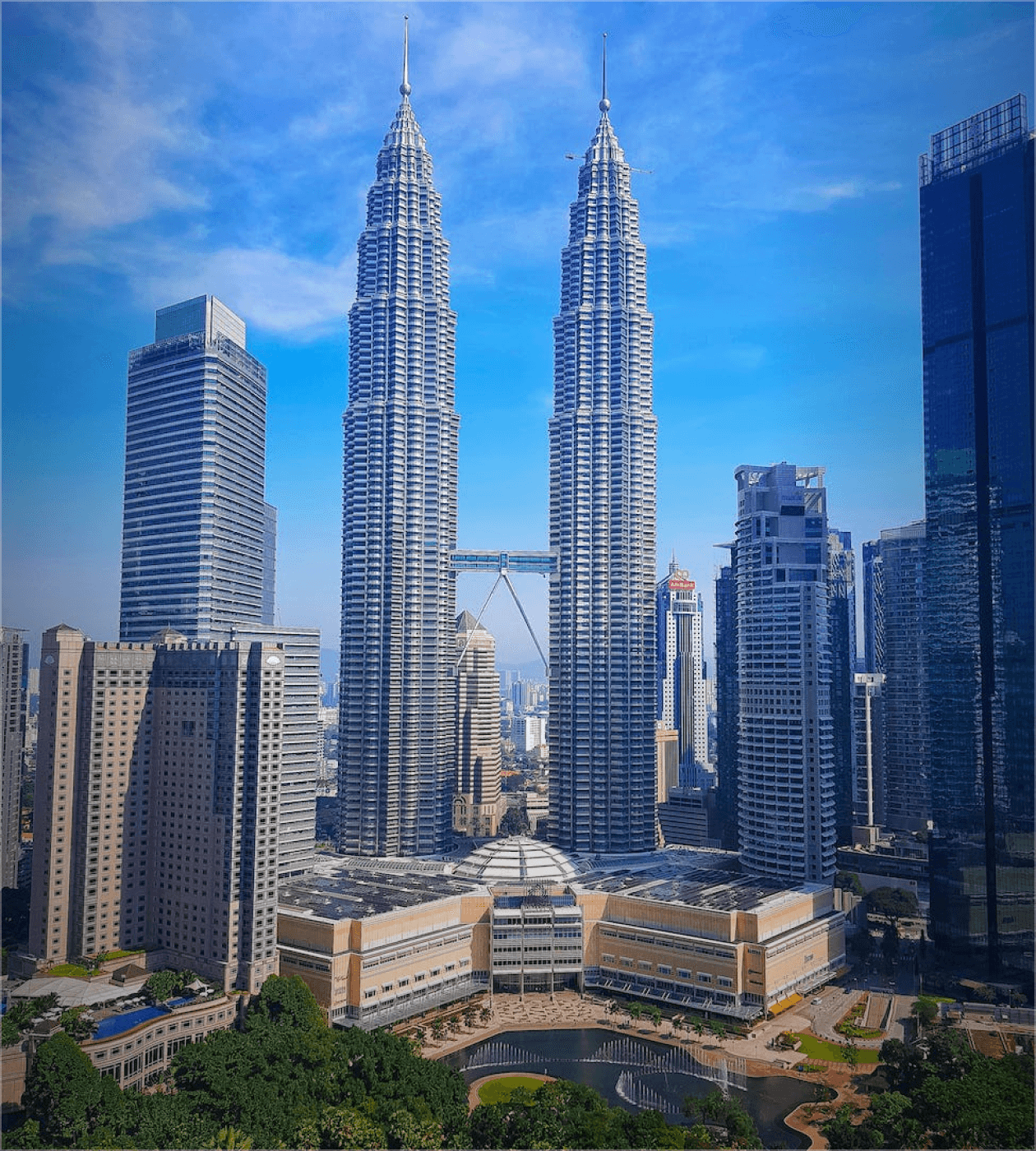
Location: Kuala Lumpur, Malaysia
Area: 395,000 m² (approx. 4.25 million ft²)
Completed: 1998
Designed by: César Pelli & Associates
Function: Energy and corporate headquarters
Rising 451.9 meters high, the Petronas Twin Towers remain one of the world's most photographed structures. Designed by Argentine architect César Pelli, they merge modern engineering with Islamic art, an architectural embodiment of Malaysia's cultural identity and economic rise.
Home to Petronas, Malaysia's national oil company, and several global corporations, the towers symbolize how Southeast Asia transformed from a resource base into a corporate powerhouse. Their skybridge, which connects the two towers at the 41st and 42nd floors, is both literal and metaphorical: a bridge between heritage and modernity.
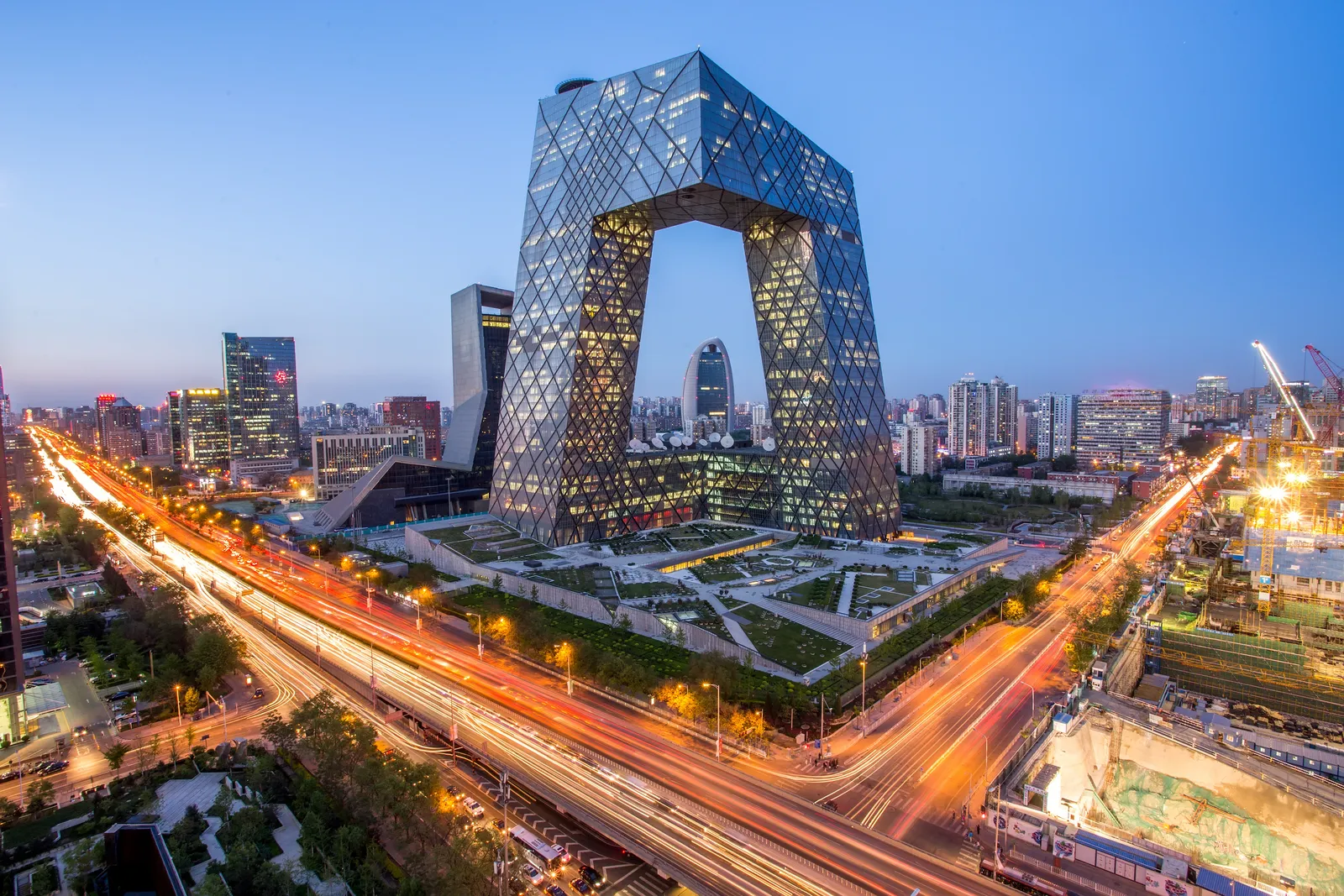
Location: Beijing, China
Area: 389,079 m² (approx. 4.19 million ft²)
Completed: 2012
Designed by: OMA (Rem Koolhaas & Ole Scheeren)
Function: Media and broadcasting
Few buildings embody boldness like the CCTV Headquarters in Beijing. Designed by Rem Koolhaas's OMA, its continuous loop structure connects two leaning towers via a massive cantilever, creating a visual and structural paradox, both open and enclosed.
The headquarters of China Central Television employs over 10,000 staff, acting as both media infrastructure and cultural symbol. It won the CTBUH Best Tall Building Worldwide Award (2013) for redefining the high-rise typology. The CCTV HQ demonstrates how architecture can become a medium of storytellingm expressing China's global confidence through design.
While these ten largest office buildings in the world vary across continents and functions, they share a common thread: each reflects the values of its time. The Pentagon's precision, Surat's entrepreneurial energy, Tokyo's sustainability, and Kuala Lumpur's ambition all echo how workplaces mirror their societies.
In today's era of flexible and digital work, it's easy to question the relevance of massive campuses. Yet, these structures prove that scale and symbolism still matter not for excess, but for identity. They are not merely workplaces, but ecosystems where innovation, culture, and community converge. In the end, the world's largest offices remind us that great architecture isn't just about size. It's about purpose built at scale, a shared belief that space can empower people to think, collaborate, and create the future.

Published: November 16, 2025
Discover more insights and expert perspectives on commercial real estate and business growth



Copyright © 2026. All rights reserved.